
Try out our fun quiz
There are lots of myths about sexual health. Do you know the facts?
Test your knowledge with our fun quiz
(Content warning: there may be some illustrations of body parts, including genitals)
Question 0
Most people orgasm each time they have sex or masturbate:
Some people are able to orgasm easily, others take a lot longer or find that only certain sexual activities can make them orgasm. For people with a vulva, clitoral stimulation is often needed to help them orgasm.
Sex does not always = orgasm. The goal of sex should be about exploring pleasure and people can experience a lot of pleasure without an orgasm.
You should only get tested for STIs when you have symptoms.
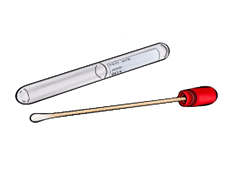
Many STIs do not show any symptoms at all.
The only way to know you have one is to get tested.
Does the contraceptive pill protect against STIs?
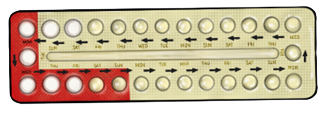
The only contraceptive that protects against STIs and unintended pregnancy is condoms.
See where you can get free condoms in WA here.
How do you get tested for syphilis?
You need to get a blood test to test for syphilis.
Syphilis cases are increasing in WA so it is important to ask your doctor to include a syphilis blood test in your STI screening. Learn more on our syphilis page: https://www.getthefacts.health.wa.gov.au/sexually-transmitted-infections/syphilis
Consent for any sexual activity needs to be gotten and given even when you’re in a long-term relationship.
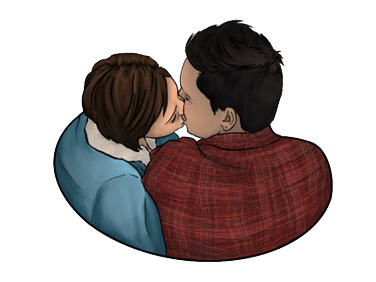
Just because you’re in a relationship or you’ve had sex with someone before, consent should never be assumed.
You always have the right to say no to anything sexual.
Make sure to get consent from someone before doing anything.
Learn more about consent by watching Consent - The REAL sex talk.
A 'full' STI screening includes...
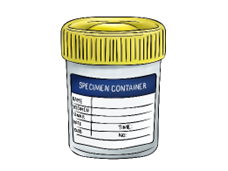
To test for all common STIs and BBVs, such as chlamydia, gonorrhoea, syphilis, HIV, you need to get both urine or swabs and a blood test.
Often, the doctor will only order urine or swabs, but it's important to also ask for a blood test to know that you're getting a full test.
Remember, a 'full' STI screen will not test for STIs such as herpes or HSV.
Learn more about getting an STI test: https://www.getthefacts.health.wa.gov.au/sexually-transmitted-infections/sti-tests
You can get or pass on an STI by:
Each STI can spread in different ways.
The only way to know if you have an STI is to get tested.
HIV can be passed on through mosquitoes.
HIV stands for Human Immunodeficiency Virus and can be passed on through blood, semen, vaginal fluids and breast milk. You can get HIV from having vaginal or anal sex without a condom, sharing needles and other injecting equipment, sharing body piercing or tattooing equipment, or through pregnancy, childbirth or breastfeeding. Learn more about HIV from WAAC: Promoting HIV education in Australia | WAAC.
People are always either biologically male or female.
Just as we have natural variations in our height, skin colour, hair colour, body shape, we can also have natural variations in our chromosomes, genitals, sexual organs and hormones.
People who have intersex variations are born with sex characteristics that don’t fit medical and social norms for female or male bodies.
Approximately 1.7 per cent of people are intersex.
Learn more about intersex from this article: What does it mean to be intersex? - ABC Everyday
You can tell if someone has an STI:
There's no way to know if someone has an STI or not.
Remember, most STIs don't show symptoms, so many people don't know if they have one.
Using condoms and/or dams and getting regular STIs tests are the best way to protect yourself and your partners.
Quick Quiz
Thanks for trying our quiz!
You got: 0 out of 10