
Try out our fun quiz
There are lots of myths about sexual health. Do you know the facts?
Test your knowledge with our fun quiz
(Content warning: there may be some illustrations of body parts, including genitals)
Question 0
HIV can be passed on through mosquitoes.
HIV stands for Human Immunodeficiency Virus and can be passed on through blood, semen, vaginal fluids and breast milk. You can get HIV from having vaginal or anal sex without a condom, sharing needles and other injecting equipment, sharing body piercing or tattooing equipment, or through pregnancy, childbirth or breastfeeding. Learn more about HIV from WAAC: Promoting HIV education in Australia | WAAC.
You should only get tested for STIs when you have symptoms.
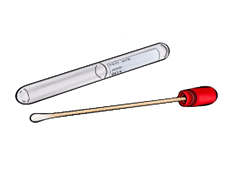
Many STIs do not show any symptoms at all.
The only way to know you have one is to get tested.
Which is the best lubricant to use with condoms?
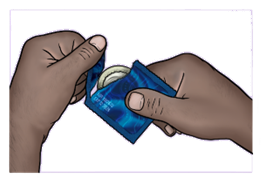
Using a water-based lubricant is best to avoid breaking or tearing the condom.
It can also increase pleasure for everyone involved.
Most people orgasm each time they have sex or masturbate:
Some people are able to orgasm easily, others take a lot longer or find that only certain sexual activities can make them orgasm. For people with a vulva, clitoral stimulation is often needed to help them orgasm.
Sex does not always = orgasm. The goal of sex should be about exploring pleasure and people can experience a lot of pleasure without an orgasm.
How many young people identify as something other than heterosexual (i.e. they identify as gay, bisexual, lesbian, pansexual, fluid, etc)?

According to the Western Australian survey of secondary students and sexual health (2021), 42.5% of students in years 10, 11 and 12 identified as something other than heterosexual. Gay or lesbian (5.6%), bisexual (24.9%), a different term (6.8%) or unsure (5.2%). With 57.5% identifying as heterosexual.
A 'full' STI screening includes...
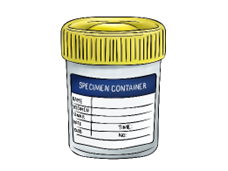
To test for all common STIs and BBVs, such as chlamydia, gonorrhoea, syphilis, HIV, you need to get both urine or swabs and a blood test.
Often, the doctor will only order urine or swabs, but it's important to also ask for a blood test to know that you're getting a full test.
Remember, a 'full' STI screen will not test for STIs such as herpes or HSV.
Learn more about getting an STI test: https://www.getthefacts.health.wa.gov.au/sexually-transmitted-infections/sti-tests
You can tell if someone has an STI:
There's no way to know if someone has an STI or not.
Remember, most STIs don't show symptoms, so many people don't know if they have one.
Using condoms and/or dams and getting regular STIs tests are the best way to protect yourself and your partners.
How do you get tested for syphilis?
You need to get a blood test to test for syphilis.
Syphilis cases are increasing in WA so it is important to ask your doctor to include a syphilis blood test in your STI screening. Learn more on our syphilis page: https://www.getthefacts.health.wa.gov.au/sexually-transmitted-infections/syphilis
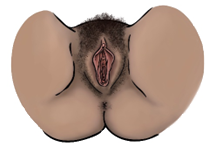
What do you call the external parts of the female genitals?
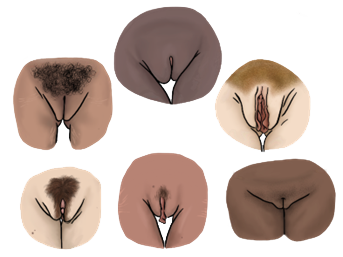
The vulva is commonly referred to as the vagina which is incorrect.
The vagina is inside - the muscular canal that goes from the vulva to the cervix.
The vulva is the outside parts - the vaginal opening, urethral opening, labia majora (outer lips) and labia minora (inner lips) and clitoris.
Sharing private sexual material without consent (also called image-based abuse) is a crime in Australia. What is an example of image-based abuse?
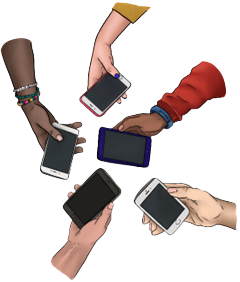
Image-based abuse is when someone shares, or threatens to share, an intimate photo or video online of you without your consent. The images can be real photos or videos, or ones that have been changed or altered, for example, Photoshopped. It is also image-based abuse if someone threatens to share an intimate image of you without your permission. You can report image-based abuse to eSafety. They can help to get the intimate images or video removed and, in some cases, take action against the person who shared it. Image-based abuse | eSafety Commissioner
Quick Quiz
Thanks for trying our quiz!
You got: 0 out of 10